What Is Composite Decking?
Composite decking is a manufactured board product made by combining recycled wood fibres and recycled plastic polymers under heat and pressure. The result is a dense, stable board that holds the visual character of natural timber without the structural vulnerabilities that come with it. Most composite boards contain between 60% and 95% recycled content, making them a more sustainable option than virgin timber.
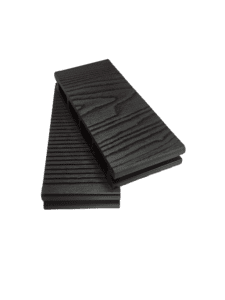
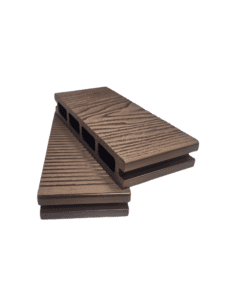
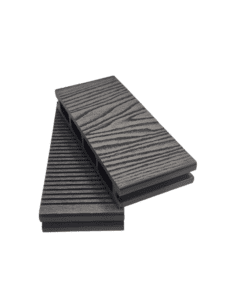
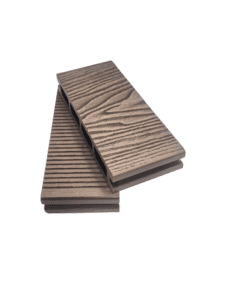
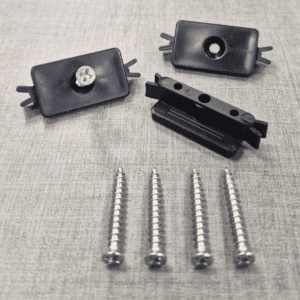
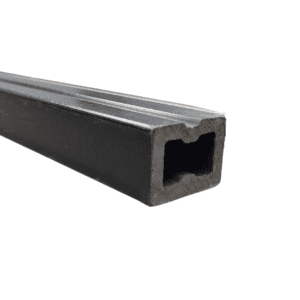
Boards are produced in two main constructions: solid core and hollow core. Solid core boards offer higher load-bearing performance, making them well suited to commercial and high-traffic areas. Hollow core boards are lighter, easier to handle on site, and more cost-effective for standard domestic installations. Both types are typically installed using a hidden fixing clip system, producing a clean, fastener-free surface finish.
Surface profiles vary by product line. Woodgrain embossed profiles replicate the texture of real timber, while grooved profiles aid water drainage and offer additional grip underfoot. Many composite boards are reversible, offering a different profile on each face.
Why Choose Composite Decking Over Timber?
Composite decking outperforms traditional timber on maintenance, longevity, and consistency of appearance. Unlike softwood or hardwood decking, composite boards will not rot, warp, split, or splinter, and they require no annual treatment with oils, stains, or preservatives.
In the UK’s damp climate, timber demands regular upkeep to prevent deterioration and surface algae growth. Composite boards resist moisture absorption, making them far less susceptible to mould. A periodic wash with warm soapy water is typically all that is required to keep composite decking clean and safe.
From a trade perspective, composite decking offers more predictable installation timescales. The boards are dimensionally consistent, arrive ready to install, and do not require acclimatisation or pre-treatment. Hidden clip fixing systems speed up laying time and eliminate face-screwing, reducing the risk of surface cracking.
Key Advantages at a Glance
- No rot, no warping, no splintering
- Slip-resistant surface, safe for barefoot use, children, and pets
- No sanding, oiling, staining, or sealing required
- Dimensionally stable in wet and dry conditions
- Available in a range of colours to suit modern and traditional settings
- Made from recycled materials, supporting sustainable building practices
- Long product warranties, typically ranging from 10 to 25 years depending on manufacturer
What Colours, Finishes, and Aluminium Alternatives Are Available?
Composite decking is available in a broad palette of colours, from natural timber tones through to contemporary grey and charcoal shades. Anthracite grey and black finishes have seen strong growth in commercial and modern residential projects, where they complement powder-coated aluminium gate and fencing systems.
Our aluminium anthracite grey tongue and groove slats and aluminium black tongue and groove slats coordinate closely with popular composite decking colour choices, allowing you to specify a coherent finish across gate infills, fencing panels, and deck surfaces within the same project. Walnut woodgrain aluminium slats are also available for projects where a warmer, timber-effect tone is required across the whole scheme.
Capped composite boards — where the recycled core is fully enclosed in a protective polymer shell — retain colour far more reliably than non-capped alternatives and represent better long-term value for most projects.
How Is Composite Decking Installed?
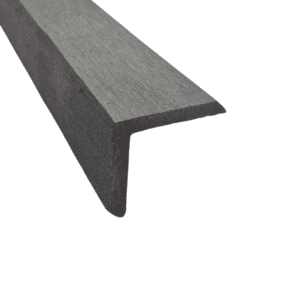
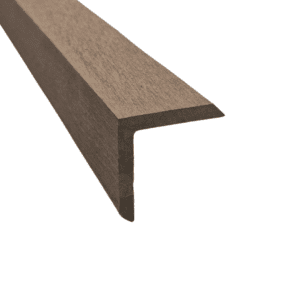
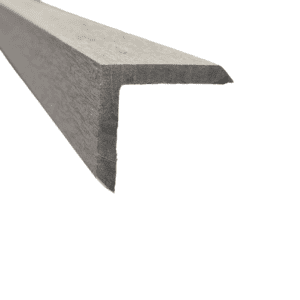
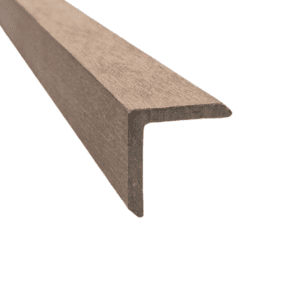
Composite decking is installed over a structural subframe of treated timber joists or aluminium framing. The subframe must be level and designed with appropriate joist spacing to suit the specific board being installed — always refer to the manufacturer’s technical data sheet. Boards are fixed using hidden T-clips or start clips, producing a surface with no visible fixings. End caps or fascia boards are applied to exposed board ends to protect the board core.
Expansion gaps must be maintained between board ends and any fixed structure to allow for thermal movement. Always refer to the manufacturer’s installation guide before laying begins.
What Are the Best Applications for Composite Decking?
Composite decking is suitable for domestic garden decks, patios, commercial terraces, poolside areas, and public amenity spaces. Its slip resistance, low maintenance requirements, and dimensional stability make it particularly well suited to areas with heavy footfall or where safety underfoot is a priority. Commercial and public sector projects — including hospitality venues, schools, care homes, and housing developers — increasingly specify composite decking for its durability and reduced maintenance burden.
Pairing Composite Decking With Gates and Fencing
Rolling Center UK is Yorkshire and the North of England’s largest gate hardware supplier. Our aluminium gate posts and slat infills coordinate directly with the colour palettes used in composite decking ranges, making it straightforward to achieve a consistent finish across the full entrance scheme.
Our anthracite grey aluminium gate post and black aluminium gate post pair directly with anthracite and black composite decking boards. La Toulousaine aluminium gate designs are available in a range of styles and finishes to complement both contemporary and traditional outdoor settings. Specifying your decking and gate products from a single trade supplier simplifies procurement and reduces lead time risk. Contact our team for trade pricing and technical support.
Frequently Asked Questions
How long does composite decking last?
Most quality composite decking products carry warranties of between 10 and 25 years, depending on the manufacturer and product tier. Capped composite boards offer the longest service life and best colour retention. With basic cleaning, a quality composite deck can realistically last 25 to 30 years in a UK climate.
Does composite decking get slippery when wet?
Quality composite decking boards are engineered with textured or grooved surface profiles to reduce slip risk in wet conditions, making them a safer choice than smooth timber decking. For high-risk areas such as pool surrounds or shaded north-facing decks, choose a board with a deep textured or grooved profile and clean regularly to prevent surface build-up.
Do I need planning permission for composite decking?
In most cases, domestic composite decking installations do not require planning permission, provided the deck is at or near ground level and does not cover more than 50% of the total garden area. Raised decks above 300mm, decks within listed building curtilages, or installations in conservation areas may be subject to permitted development restrictions. Always check with your local planning authority if there is any uncertainty.

 Pay in 3 interest-free payments.



 Shop Now, Pay with Klarna