What is an access control intercom?
An intercom lets a visitor at a gate or door speak to someone inside before they are let in. Every system has an outdoor call point with a call button and speaker, and something indoors or on a phone to answer it: a handset, a video monitor or a mobile app. When the occupant is happy to let the visitor in, they press a button and the intercom releases the electric gate, door strike or magnetic lock.
An access control intercom combines that conversation with entry for people who don’t need to call ahead. Residents, staff and regular visitors use a keypad code, a proximity fob or their phone, while everyone else presses the call button. On most gate installations the two are wired into the same gate control board, so one entry point handles both.
Types of intercom system
The right intercom system depends mainly on how the signal gets from the gate to the person answering it. Each type below has its own range:
- Wired intercoms run a dedicated cable between the gate and the property. They are the dependable choice for permanent installations where a cable can be ducted underground, and come as audio intercoms, video intercoms and 2-wire video intercoms, which carry power, audio and video over just two cores.
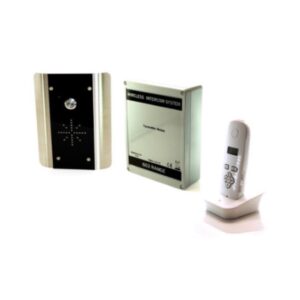
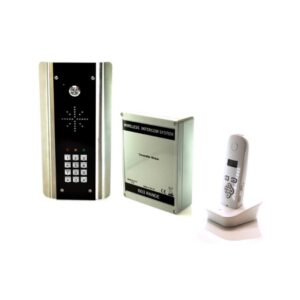
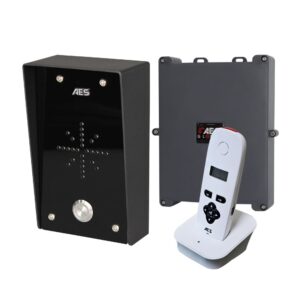
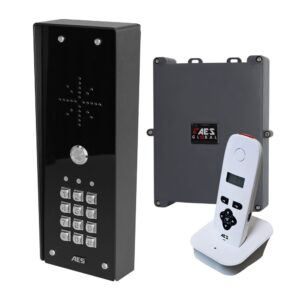
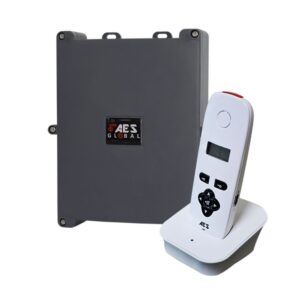
- Wireless intercoms send audio or video by radio, so there is no cable to run between gate and house. They suit sites where trenching isn’t possible, as long as the rated range covers the real distance and obstacles.
- GSM intercoms use a SIM card and the mobile network to call your phone when a visitor presses the button, so you can answer and open the gate from anywhere. They are ideal for unmanned sites, holiday homes and properties with no cable route. See video GSM intercoms and audio GSM intercoms.
- IP intercom systems connect to the building’s data network. A video IP intercom can be answered on IP monitors, smartphones or both, and scales from a single house to apartment blocks and commercial sites.
- WiFi intercoms join an existing wireless network and are usually answered through an app.
Access control hardware
Access control covers the hardware that lets authorised people in without calling. Most entry systems pair an intercom with at least one of these:
Which intercom system is right for your gate?
Start with four questions:
- Can you run a cable? If you can duct a cable from the gate to the property, a wired or IP system will give the most reliable picture and sound. If you can’t, look at GSM or wireless.
- Who will answer it? If someone is usually at home, an indoor handset or monitor works well. If you want to answer from anywhere, choose GSM, IP or WiFi with app calling.
- How many users or dwellings? A single house needs one call button. Flats, shared drives and business units need a multi-button or keypad-scroll panel, or an IP system that adds users on the network.
- Do you need to see visitors? Video lets you check who is at the gate before you open it, and is worth specifying wherever security matters.
Think ahead too. A system that accepts extra handsets, monitors, keypads or proximity readers will cope as the site’s needs change, without replacing the whole call point.
Connecting an intercom to an electric gate
Most intercoms release a gate through a relay contact wired into the gate automation control board’s open or pedestrian input, or by switching the power to an electric lock. Before you buy, check that the intercom’s relay output suits your control board or lock, and that you have a suitable power supply at the gate.
An intercom fitted to a powered gate becomes part of that gate’s automation, so the complete installation has to be safe, including safety edges and photocells where they are needed. Our guide on how to make your electric gate safe explains what is involved.
Intercom spares and replacements
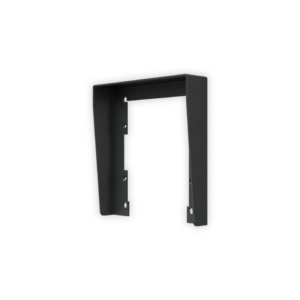
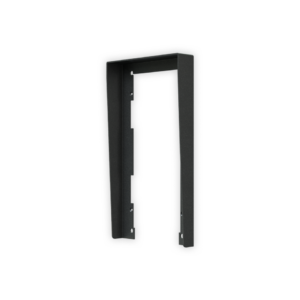
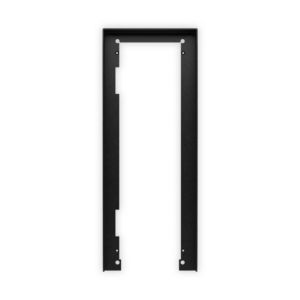
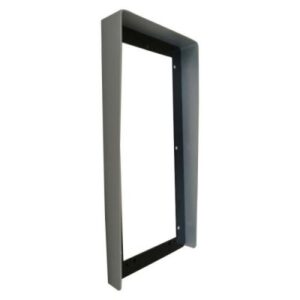
Many intercom faults don’t need a new system. Our replacements and spares range covers audiophones, videophones, video monitors, speaker, camera, keypad and call button modules, rain shields and relays, so you can repair or extend a modular panel rather than replace it.
Why buy intercoms from Rolling Center?
Rolling Center supplies trade installers and homeowners with intercoms and access control from brands including AES, Videx, Akuvox, Comelit and Hikvision. Our team can advise on compatibility with your gate automation, and trade customers can apply for a trade account.
We are the largest gate hardware supplier in Yorkshire and the North of England, with over 40 years of industry experience.
For the wider project, see our guide to choosing an electric gate kit, or contact us with your site details.
Frequently asked questions
What is the difference between an intercom and access control?
An intercom handles the conversation between a visitor and the person letting them in. Access control lets authorised people enter without calling, using a keypad code, a proximity fob or card, or their phone. Most gate entrances use both, wired into the same gate control board.
Which intercom system is best for a long driveway?
Where you can duct a cable, a wired or IP system gives the most reliable audio and video over long distances. Where you can’t, a GSM intercom avoids the cable run altogether by calling your mobile over the phone network. Wireless intercoms also avoid cabling, but check the rated range against the real distance and any obstacles.
Can I connect an intercom to my existing electric gate?
In most cases, yes. Intercoms usually release the gate through a relay contact wired into the control board’s open input, or by switching an electric lock. Check that the relay suits your control board and that power is available at the gate, and send us your gate automation model if you’d like a compatibility check.
How does a GSM intercom work?
A GSM intercom contains a SIM card and calls a nominated mobile number when a visitor presses the button. You speak to the visitor through your phone and open the gate by pressing a key during the call. No indoor handset or cable to the house is needed, which suits unmanned or remote sites.
Is an IP intercom better than a GSM intercom?
Neither is better in every case. An IP intercom runs over a data network, gives high-quality video and suits sites with many users or a network cable to the gate. A GSM intercom needs only power and mobile signal at the gate, so it is often the simpler choice where there is no cable route.
Do I need a professional to install an intercom on my gate?
For a simple wired intercom on a manual gate, a competent DIYer can often do the job. When the intercom is part of a powered gate, the whole installation must be safe and properly documented, so we recommend a qualified gate automation installer. Trade installers can contact us for product documentation and technical help.

 Pay in 3 interest-free payments.



 Shop Now, Pay with Klarna