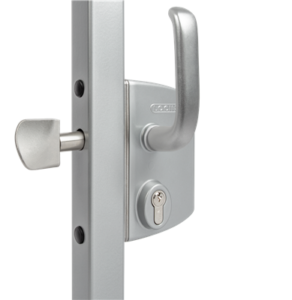
How a sliding gate lock works
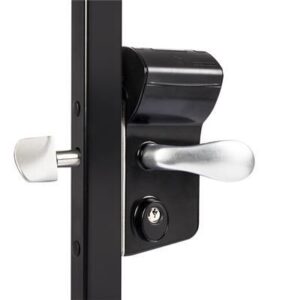
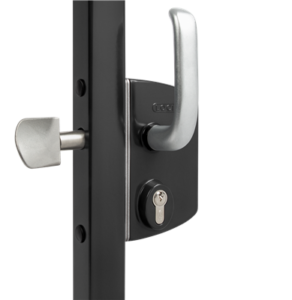
A sliding gate lock works differently from a swing gate lock. Because the gate travels sideways rather than swinging into a frame, the lock uses a hook bolt: the bolt throws out and hooks behind a keep fixed to the receiving post, pulling the gate in and holding it against the direction of travel. That hooking action is what stops the gate simply being slid back open, which a straight deadbolt would not prevent.
Measure your box section first
Sliding gate locks are made to fit a specific box section, which is the square steel upright of the gate frame. Measure the width of that section before you order:
- Locinox LSKZ U2 surface mounted locks are available for 40mm, 50mm, 60mm, 80mm and 100mm box section.
- Gatemaster SGLDS keypad locks are available for 40mm, 50mm and 60mm box section.
- Locinox Leonardo LLKZ is for 40mm box section.
If the box section is an unusual size, or the gate frame is not square tube, send us a photo and the dimensions and we’ll tell you what fits.
Handed locks: left or right?
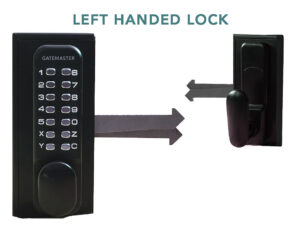
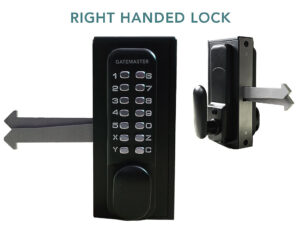
The Gatemaster keypad locks are supplied left handed or right handed, so the keypad and handle sit correctly for the way your gate closes. Getting the handing wrong means the lock will not operate properly, so confirm it before ordering. If you are not certain which you need, our team can work it out from a photo of the gate and the direction it slides.
Key, keypad or codelock?
- Key operated locks, such as the Locinox LSKZ U2 range, are the straightforward option: surface mounted, cylinder operated, and available across the widest range of box sections. They suit gates where the same few people hold keys.
- Keypad locks, such as the Gatemaster SGLDS, use a code instead of a key. That suits sites where several people need access and keys would be lost or copied, such as yards, compounds and shared entrances. The single sided keypad means the code is entered from the outside.
- Codelocks, such as the Locinox Leonardo, combine mechanical locking with code entry in a single unit designed for gates.
None of these need power or cabling, which is what makes them suitable for gates away from a supply.
Colour and finish
The Locinox LSKZ U2 locks come in black (RAL 9005) and silver, so the lock can be matched to a powder coated or galvanised gate. The Leonardo is available in black.
You will also need a keep
A sliding gate lock needs a matching keep on the receiving post for the hook bolt to engage. Our sliding gate hardware range includes gate keeps, and the keep must suit both the lock and the post. Order them together, and if you’re replacing a lock on an existing gate, check the existing keep still matches.
Sliding gate locks vs swing gate locks
They are not interchangeable. A swing gate lock throws a bolt into a keep on a fixed post as the gate swings shut, while a sliding gate lock has to hook behind the keep to resist the sliding motion. If you’re working on a swing gate, see our gate locks for swing gates. For an automated gate that needs to lock on a signal from a keypad, intercom or reader, see our electric and magnetic gate locks.
Why buy sliding gate locks from Rolling Center?
We stock the locks, the keeps and the rest of the sliding gate hardware, so the parts you order fit together and arrive at once. Orders placed before 3pm go out on next day delivery, with timed and direct-to-site options, and our technical team can confirm box section size, handing and the right keep before you order.
FAQs
What size sliding gate lock do I need? Measure the box section of your gate frame, which is the square steel upright the lock fits to. We stock locks for 40mm, 50mm, 60mm, 80mm and 100mm box sections. If yours is a different size, send us the dimensions and we’ll advise.
How is a sliding gate lock different from a normal gate lock? A sliding gate lock uses a hook bolt that hooks behind a keep on the post, which resists the gate being slid back open. A swing gate lock throws a straight bolt into a keep, which works for a gate that swings but not for one that slides.
What does left handed or right handed mean? It describes which side the lock and keypad are fitted for, based on the way your gate closes. The Gatemaster keypad locks are supplied handed, so confirm the handing before ordering. Our team can identify it from a photo.
Do I need a separate keep? Yes. The hook bolt engages into a keep fitted to the receiving post, and the keep needs to match both the lock and the post. We stock gate keeps in the sliding gate hardware range.
Can I fit a keypad lock to a sliding gate? Yes. The Gatemaster SGLDS range is a keypad lock made specifically for sliding gates, available for 40mm, 50mm and 60mm box sections.
Can a sliding gate lock be electric? The locks on this page are mechanical and need no power. For an automated sliding gate that should lock and release on a signal from an intercom, keypad or reader, see our electric and magnetic gate locks.
Will these fit a wooden or composite gate? These locks are designed for metal gates built from box section. If your gate is timber or composite framed, contact us before ordering.

 Pay in 3 interest-free payments.



 Shop Now, Pay with Klarna